For
4
pers.
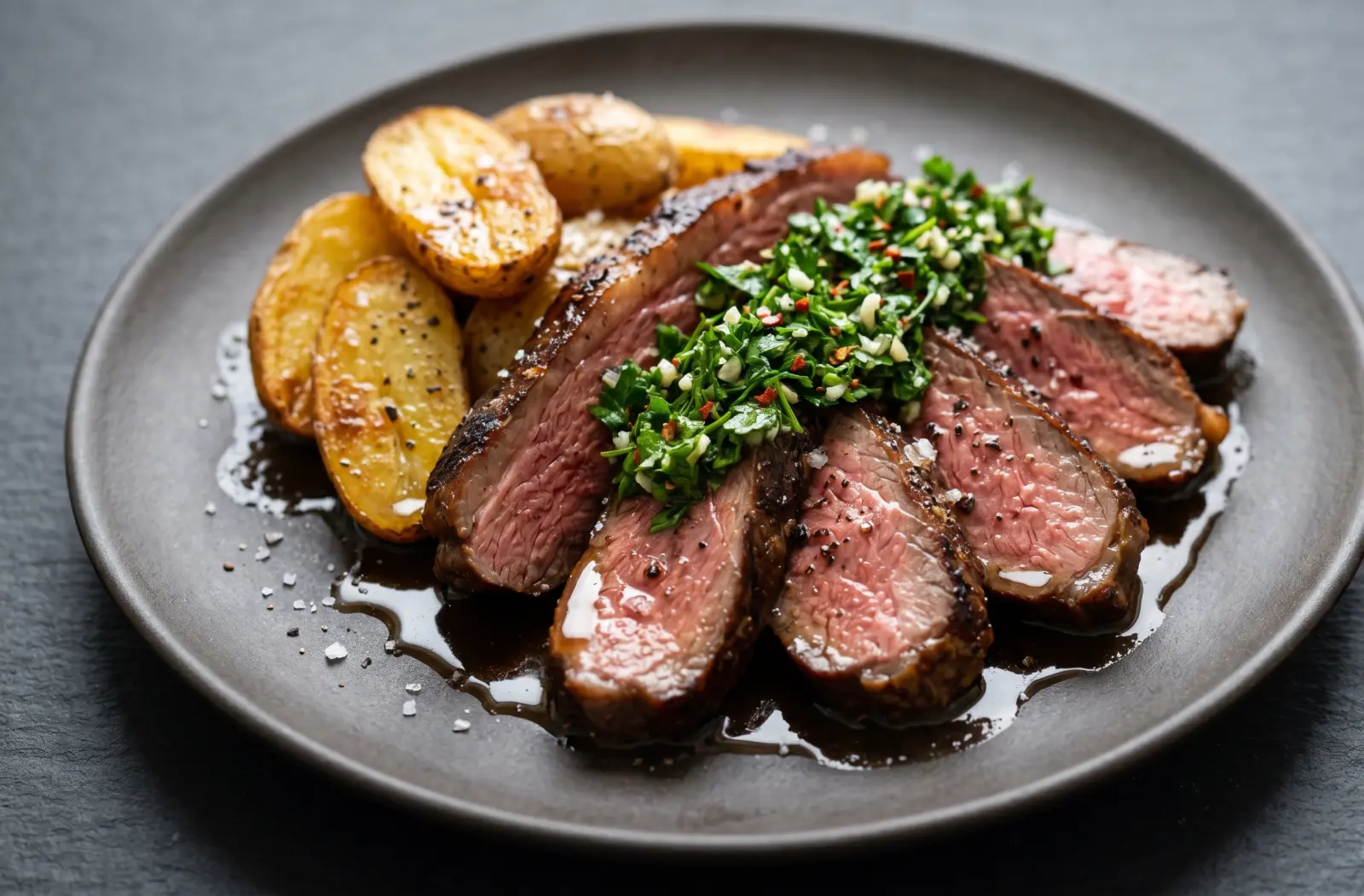
Argentine Beef Picanha, Kamado Reverse Sear and Confit Ratte Potatoes
A masterful fusion between the excellence of the South American cut and the Texan 'Reverse Sear' technique. An ultra-low temperature wood-fire cook for exceptional tenderness, followed by a searing finish for an intensely umami crust. All awakened by the acidic freshness of a true chimichurri.
Prep : 30 min
Total time :
2 h 30 min
Required Equipment
Gastronomic Protocol
Click to cross outMake ahead (Mise en place and Dry Brining)
1
Step 1
Start by lightly trimming the picanha if necessary, but keep the thick fat cap intact. Using a sharp knife, score the fat in a crosshatch pattern without cutting into the meat. This technique allows the fat to render more efficiently during cooking and prevents the piece of meat from curling up under the heat.
2
Step 2
Vigorously massage the meat with the coarse sea salt, paying special attention to the scored fat. Place the picanha on a wire rack in the refrigerator, uncovered, for at least 4 hours (ideally overnight). This 'Dry Brining' process creates an osmotic shock: the salt draws out surface moisture, dissolves in it, and is then reabsorbed deeply to season the muscle core while drying the exterior, guaranteeing a perfect crust when searing.
3
Step 3
Prepare the chimichurri: very finely chop with a knife (do not use a blender to avoid oxidation and turning it into a puree) the flat-leaf parsley, coriander, and germinated garlic. In a bowl, mix these herbs with the oregano, Espelette pepper, red wine vinegar, and olive oil. Let sit at room temperature. The acidity of the vinegar will slightly 'cook' the herbs and release their essential oils, creating a bright condiment that will cut through the richness of the beef.
4
Step 4
Wash the Ratte potatoes without peeling them. Parboil them in a large pot of boiling salted water for 10 minutes (they should remain firm). Drain them, cut them in half lengthwise, and set aside. Boiling them gelatinizes the surface starches, which will allow them to become ultra-crispy later on.
Kamado Cooking (The Reverse Sear)
1
Step 1
Light your Kamado and set it up for indirect cooking (with heat deflectors), stabilizing the temperature at 110°C (230°F). Add a chunk of smoking wood (oak or hickory) to the coals. Place a cast iron Dutch oven or skillet under the grate to catch the drippings. Place the whole picanha on the top grate, fat side up.
2
Step 2
Let the meat smoke gently until the internal temperature reaches exactly 40°C / 104°F (about 45 to 60 minutes). It is crucial to stop at 40°C as carryover cooking will continue under the foil in the next step. This extremely slow temperature rise allows natural enzymes to tenderize the muscle without expelling its water.
3
Step 3
During the smoking of the meat, the fat cap will slowly render and drip into the cast iron skillet below. Halfway through the cook (around 30°C / 86°F internal for the meat), place your parboiled Ratte potatoes into this skillet. They will slowly confit in the smoked beef fat, absorbing incredible savory juices.
Just before serving (Strategic Slicing, Searing and Plating)
1
Step 1
Remove the picanha and the potato skillet from the Kamado. Let the meat rest on a cutting board under a loose sheet of aluminum foil for 15 minutes. Thermal inertia will gently continue the internal cooking. Next, slice the whole piece into thick steaks by cutting with the grain of the meat. This strategic cut preserves fiber integrity for now and maximizes the exposure of surface proteins to the flames for the upcoming Maillard reaction.
2
Step 2
During the resting time, remove the deflectors from your Kamado and open the vents completely to transform your grill into a blazing forge (at least 300°C / 570°F). Sear your thick picanha steaks over direct heat, fat side down first. The intense flames will trigger violent caramelization. Sear for about 1 to 2 minutes per side to obtain a dark, umami-rich crust.
Step 3
Remove the steaks from the heat and place them in a rimmed dish under a sheet of aluminum foil. Let them rest again for 5 minutes. During this crucial phase, the meat will release a large amount of cooking juice, extremely rich in myoglobin and caramelized drippings; it is imperative to save this nectar! Then proceed with the final cut: slice each steak perpendicular to the muscle fibers (against the grain). Arrange the pink slices with the confit Ratte potatoes. Generously drench the meat with the collected resting juices (ideally, dip each slice into it before tasting), crown with chimichurri, and serve immediately.
Nutritional Values
per pers.850
Kcal
55g
Prot.
35g
Carbs
52g
Fat
Chef's Tip
The two-step slicing of the picanha is the ultimate secret. First, cut into steaks with the grain to maximize the searing surface (Maillard reaction), then into thin slices against the grain after a second rest. This transforms a textured cut into a piece that literally melts in your mouth.
Wine Pairing
The richness of the rendered beef fat and the smoky intensity demand a full-bodied red wine with good acidity to cleanse the palate. A great Mendoza Malbec (Argentina) or a Uruguayan Tannat will offer polished tannins that bind perfectly with the meat's proteins.
Did you like this recipe?
Your review helps other cooks discover it.