For
4
pers.
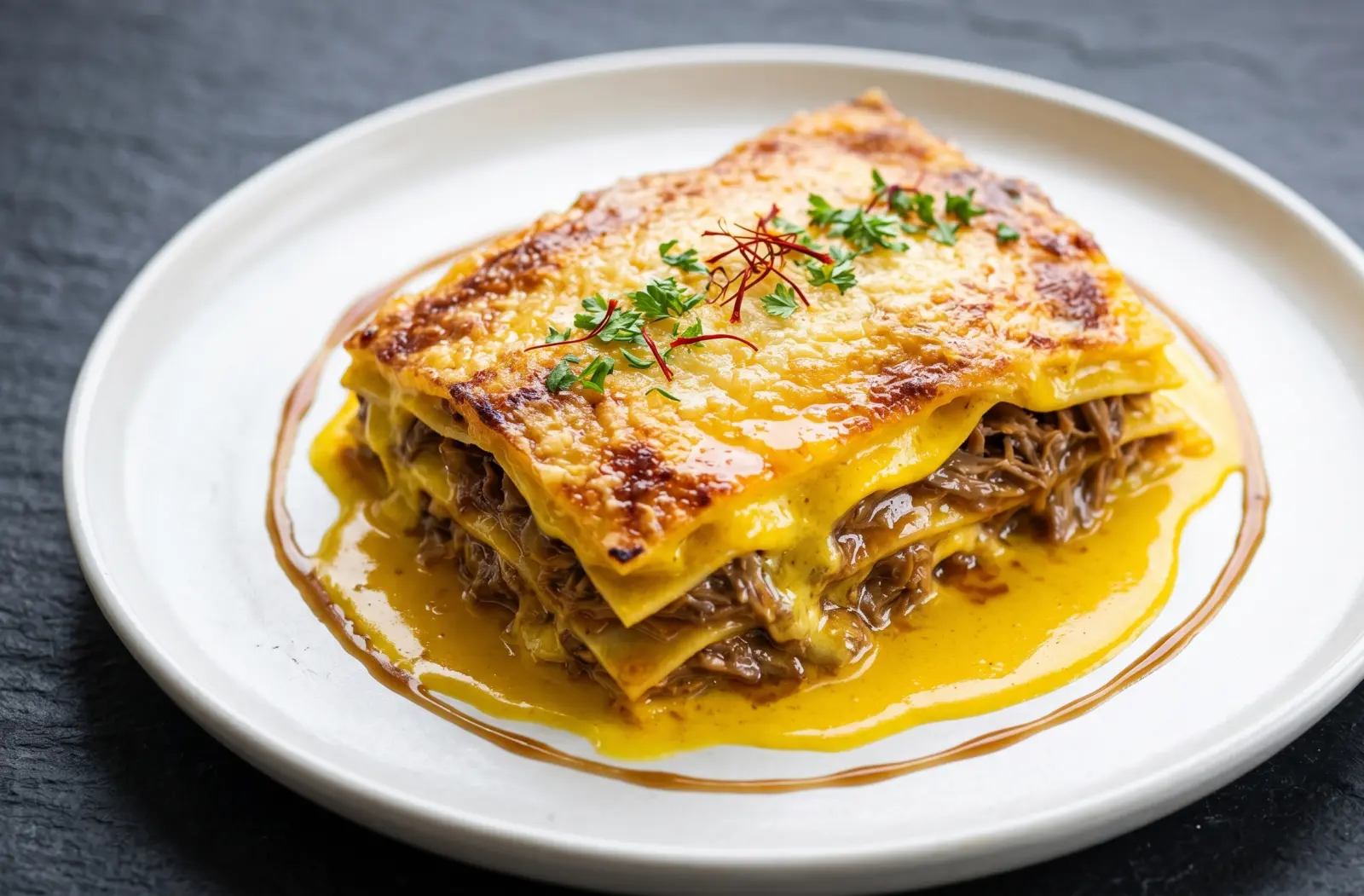
Golden Lasagna with Vin Jaune Veal Ragù & Saffron Béchamel
A flavor masterpiece where rustic veal shank, slow-cooked for 10 hours in the oven, meets the elegance of Vin Jaune. Bronze-die lasagna sheets absorb a fluid saffron béchamel, creating a melting texture and imperial gold hue.
Prep : 45 min
Total time :
11 h
Required Equipment
Gastronomic Protocol
Click to cross outAnticipation: Slow-Cooked Veal Ragù (10h ahead)
1
Step 1
On your stovetop, heat a stainless steel pan over high heat. Sear the veal shank on all sides until a deep amber crust forms. This Maillard chemical reaction creates the fundamental flavors of the ragù. Set the shank aside and deglaze the pan with a bit of water to recover the precious caramelized juices.
2
Step 2
In your Dutch oven on the stove, sweat the white mirepoix (finely diced yellow onion, leek white, and celery) with a drizzle of olive oil. The vegetables should become translucent and tender without any browning to preserve the dish's brightness. Pour in the Vin Jaune and scrape the bottom well. Let reduce by half through evaporation to concentrate the noble acidity and nutty notes of the Savagnin.
3
Step 3
Reintroduce the shank, marrow bones, and reserved juices into the pot. Moisten with white veal stock up to two-thirds of the meat. Preheat your oven to 230°F (110°C). Place the hermetically closed pot inside for 10 hours. This gentle and constant heat ensures a perfect hydrolysis of collagen, transforming the tissues into creamy gelatin.
4
Step 4
Once cooked, delicately shred the meat with a fork. Scoop out the melting marrow from the bones and fold it directly into the meat. Strain and reduce the remaining cooking liquid until syrupy (meat glaze), then bind the ragù together for a glossy and rich texture.
Finishing and Service: Assembly and Baking (D-Day)
1
Step 1
Prepare the Golden Béchamel: infuse 0.5g of saffron threads in warm whole milk for 30 minutes. Make a white roux (butter and flour), then pour in the saffron milk. Whisk until lightly thickened: the sauce must remain fluid, almost liquid, to allow optimal hydration of the dry pasta through osmosis during baking.
2
Step 2
Assembly: in a baking dish, spread a base of saffron béchamel. Arrange a layer of dry 'Trafilata al bronzo' lasagna sheets, then a generous layer of veal ragù. Repeat for 3 or 4 layers. Finish with a coating of béchamel and freshly grated Parmigiano Reggiano.
3
Step 3
Steaming phase: Preheat the oven to 340°F (170°C). Cover the dish tightly with a sheet of aluminum foil for the first 20 minutes. The steam from the béchamel will thus 'steam' the bronze-die pasta, making them tender without losing their structure.
4
Step 4
Browning phase: Remove the foil for the last 15-20 minutes. Optionally increase the heat slightly to brown the Parmesan to an amber color. Let rest for 10 minutes out of the oven before serving: this is the secret for a perfect cut and harmony of textures.
Step 5
Plate a rectangular portion in the center of a preheated plate. The saffron yellow should contrast with the deep and glossy brown of the ragù. Serve immediately with a glass of Château-Chalon or a wine from l'Étoile for perfect aromatic resonance with the Vin Jaune in the ragù.
Nutritional Values
per pers.840
Kcal
52g
Prot.
55g
Carbs
44g
Fat
Chef's Tip
Slow oven cooking (210-230°F) is ideal for perfect thermal control of collagen. When using dry bronze-die sheets, the secret lies in the fluidity of the béchamel and using 0.5g of saffron to achieve that 'Oro' hue without bitterness. A 10-minute resting period after baking is essential for the pasta to finish absorbing residual moisture.
Wine Pairing
The Vin Jaune used for deglazing is the perfect pairing. Its nutty notes and sharp acidity balance the marrow's fat. A Château-Chalon or a wine from l'Étoile (Jura) will act as a masterful aromatic thread.
Did you like this recipe?
Your review helps other cooks discover it.